3140


Hard oligo-mesotrophic waters with benthic vegetation of Chara spp.
Syntaxonomy. Nitellion flexilis Dambska 1966: Nitelletum flexilis Corillion 1957; Charion vulgaris (Krause et Lang 1977) Krause 1981: Charetum vulgaris Krause 1969; Charion fragilis Krausch 1964: Charetum fragilis Fijalkowski 1960.
Species: Chara algae (Chara spp.:
Ch. delicatula ,
Ch. fragilis Photo: Топняк,
Ch. hispida Photo: Mogens Holmen,
Ch. vulgaris ,
Nitella spp.:
Nitella flexilis Photo: http://akvaryby.org.ua/stranotobr.php?nomstr=119,
N. mucronata Photo: Wikipedia).


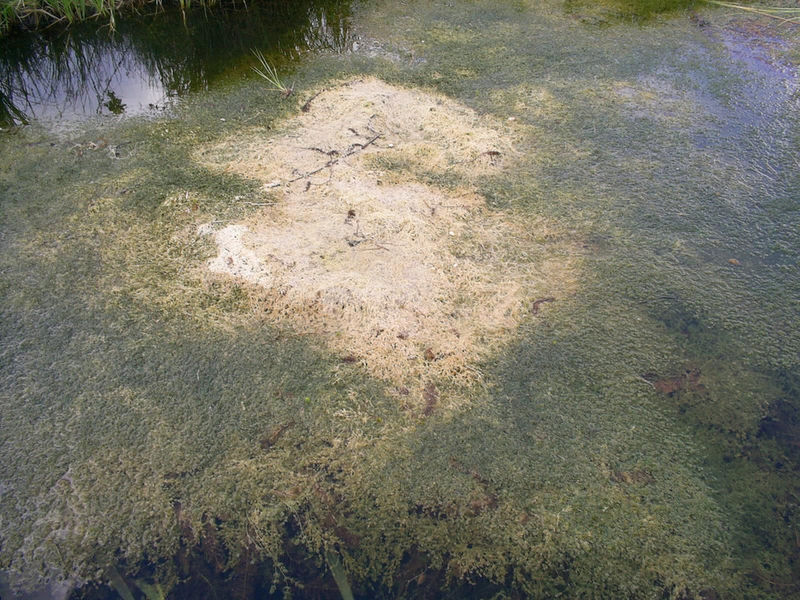
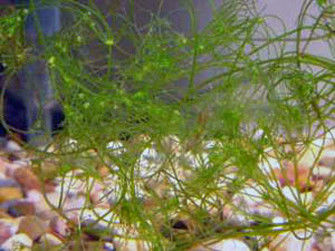
Structure. The habitat is characterized by communities of various species of Chara algae making up the layer bottom (benthos) varied in capacity in the basins at the depth of 0,2-5 m, known as “Chara fields”. Coenosis of Chara algae are poor in species. They are often monodominant and competitively weak. Sometimes Сhara algae form communities with higher aquatic plant species, in particular with Batrachium or Potamogeton species and
Elodea canadensis . They are developed with the participation of moss
Fontinalis antipyretica Photo: http://www.ekzotika.com/plant33 in oligotrophic basins and with hydrophytes in shallow water. Also, the habitat of oligo-mesotrophic basins with Chara algae can be developed as a pioneer formation on anthropogenically transformed areas such as pits along the river channels in places of gravel extraction and shallow ponds.
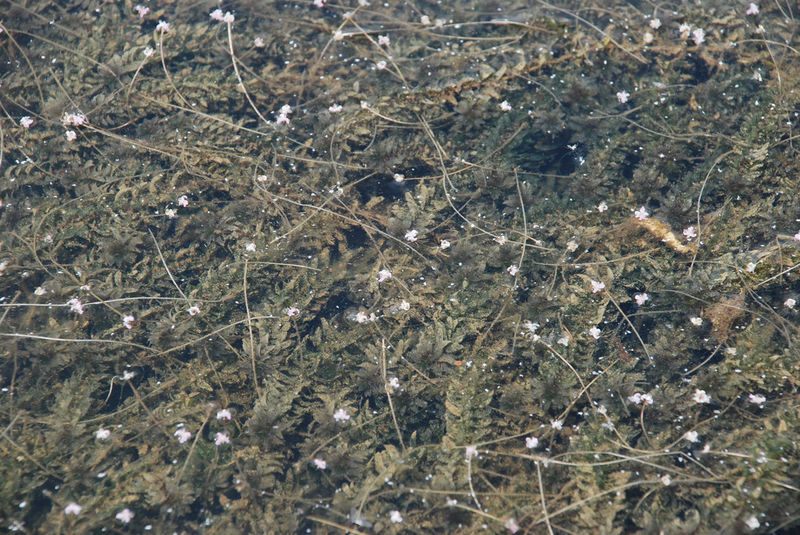

Ecological characteristic. Habitat forms predominantly in small clean stagnant basins – meander lakes, ponds, ephemeral ponds with high water transparence, neutral or weakly alkaline reaction (pH 6,0-7,5) and high calcium content. Amount of nutrients in the water is low or moderate (mostly oligo-mesotrophic or dystrophic basins). Characteristic features of the basins are sandy or silt-sandy substrate of the bottom with carbonate deposits and a thin sapropel layer.
Threats. The main factors causing decrease of the habitat areas are water pollution and change of hydrological regime.
Management. Maintenance of the natural hydrological regime of basins, decrease of eutrophication level.
References. Дідух, Фіцайло, Коротченко та ін., 2011; Кіш, Андрик, Мірутенко, 2006; Chytrý, Kučera, Koči (eds.), 2001; Husak, Rydlo 1985; Stanova, Valachovič (eds.), 2002; Valachovič et al., 2001; Viceníková, Polák, 2003.
Authors: L. Borsukevych, V. Honcharenko.