Econet is a complex, multilevel, spatial system, which includes natural biotic as well as abiotic components of ecosystems, natural and also modified and degraded landscapes that require preservation or restoration, including by means of unexhausting use (Rozbudova, 1999). As to its definition, to the ecological network should be included not only territories with preserved natural vegetation, but as well as modified, even degraded landscapes that need restoration.
In the past, nature conservation fund of the investigated region has being formed without regard to principles of the unified network. As a result it consists of geographically isolated protected areas, which do not cover sufficiently all geobotanical regions characterized by a high level of biodiversity. To ensure the effective role of nature conservation fund, it is reasonable to form it as an integral ecological network. Analysis of the nature protected areas distribution showed that territories of Opillia and Polissia groups of natural regions are insufficiently presented in their system (less than 10% of protected areas) (Kostenko, Petrova, Tretiak, 1999). Therefore, in order to improve the representativeness of nature protected areas network it is reasonable to expand it in these very areas.
In the investigated region there are a lot of different types of natural and semi-natural ecosystems such as forest, meadow, steppe ones etc. Despite the significant anthropogenic influence, a number of valuable wetlands which are important for the conservation of common and rare ecosystems, communities and species have been preserved. However, there are a lot of those which are in crisis state.
The basis of the ecological network should be a river basin, which is a natural integral territorial unit with clearly defined borders, the uniform complex of geomorphological, soil, climatic conditions, and its landscape formed systems. It gives an opportunity to establish the structure and correlation between the econet elements and their efficient spatial location (Sheliag-Sosonko, Grodzynskyi, Romanenko, 2004). The biotic objects that can be refered to the ecological network components are forests, peat bogs and aquatic communities, relict, endemic and rare plant coenosis. Rivers with protective riverside strips and water-protective zones, surrounding basins are to play the role of the connecting areas (ecological corridors). Lakes, peat bogs, meander lakes, floodplains may be the components of local natural cores and ecocorridors of higher levels. Wetlands such as drained boggy massives, eutrophic floodplains and reclamation canals should also belong to the restoration territories.
According to the plan of the perspective Econet of Ukraine, investigated territory connects two ecocorridors of national level: latitudinal (Galytsko-Slobozhanskyi) and meridional ones (Buzkyi) (Rozbudova, 1999). We have made proposals as to the improvement of the projected regional ecological network. Based on literary data (already existing regional schemes), information concerning nature conservation areas and on our own research, the areas perspective for inclusion into the regional ecological network are defined. Such a measure will provide the protection biodiversity of all ecosystems.
The Western Bug river valley is an ecological corridor of the international level, uniting the national econet with The Western Bug river ecocorridor on the territory of Poland, as well as it connects the plain landscapes of Polissia and Podilska Elevation. There is the smallest number of nature protected areas in comparison with other basins of the region (a total of 70, with the area of more than 18 thousands of hectares). Percentage of protected areas is low and varies from region to region – from 0.07 to 2%. For comparison, in Turka district (the Dniester river basin) the percentage of protected areas is 20%. Despite a significant area of wetlands in comparison with other basins, they do not receive the appropriate protection. Regional econet project of this region is on the stage of being elaborated (Kostenko, Petrova, Tretiak, 1999).
Latitudinal and meridional natural corridors belong to the communication elements of the regional ecological network of the Western Bug river basin. The latitudinal corridors are represented by Buzko-Volynskyi (international) and Malopoliskyi ones, connecting the Dniester River basin econet and Galytsko-Slobozhanskyi national ecocorridor. Meridional natural corridors are spatially restricted by the middle and small river valleys such as Rata, Poltva, Solokiia, Svynia and others (Figure 1). In the Western Bug river basin econet it is proposed to select four key areas of the national level and four key areas of the regional level.
Holohirska (1) key area of national level includes the territory of Zahidnopodilsko-Opilskyi highland ecocorridor, as well as botanical nature monuments of national importance, such as “Lysa Hora” and “Hora Sypuha”, “Lis pid Trudovachem” locality, Romaniv and Svirzh landscape reserves of local importance. Steppe and meadow vegetation communities are typical for this territory. Higher aquatic and boggy vegetation occupy a small area. The protection of typical communities will be realized within the core.
Verhniobuzka (2) key area of national level includes the territory of Zahidnopodilsko-Opilskyi highland ecocorridor of the national level, as well as Verhniobuzkyi landscape reserve of local importance, “Sasivska” botanical nature monument and “Peniatska” complex nature monument. Meadow and boggy vegetation communities are typical for this territory. The protection of typical and rare communities will be realized within the core.
Tsentralnomalopoliska (3) key area of national level includes the territory of Malopoliskyi ecocorridor of national level, Ponykivskyi hydrological reserve of local importance and protected areas such as: Storonybaby, Tadani, Velykomostivske localities. Forest, shrubby and boggy vegetation communities are typical for this territory. The protection of typical and rare communities will be realized within the core.
Zakhidnomalopoliska (4) key area of national level includes the territory of Malopoliskyi ecocorridor of national level, Yavorivskyi National Nature Park, as well as “Rawske Roztochia” regional landscape park, Potelytskyi hydrological reserve of national importance and Zavadivskyi forest reserve of local importance. Forest meadow and shrubby vegetation communities are typical for this territory. The protection of typical and rare communities will be realized within the core.
Volytska (a) key area of regional level includes the territory of Volytskyi Botanical reserve of national importance. Forest vegetation communities are typical for this territory. Higher aquatic and boggy vegetation occupy a small area. The protection of typical and rare communities will be realized within the core.
Pukachivska (b) key area of regional level includes the territory of Pukachivskyi zoological reserve of national importance. Forest vegetation communities are typical for this territory. The protection of typical communities will be realized within the core.
Prybuzka (c) key area of regional level includes the territory of “Fedorivka” landscape reserve of local importance, “Velykyi lis” forest reserve of local importance and proposed “Skomorokhy” landscape reserve of national importance. Forest and riverside vegetation communities are typical for this territory. Higher aquatic and boggy vegetation represented by typical and rare communities will be realized within the core.
Sosnivska (d) key area of regional level includes the territory of proposed “Starytsia Bugu” complex national reserve and “Hirnykivski bolota (bogs)” complex reserve of local importance. Aquatic, boggy and floodplain vegetation communities are typical for this territory. Higher aquatic and boggy vegetation represented by typical and rare communities will be realized within the core.
All the proposed regional key areas are located within Volynske Opillia and Male Polissia regions and are characterized by a low percentage of protected areas (less than 1%). They include typical and rare vegetation communities for these regions. In prospect it is possible to create Buzka kea area of the national level instead of Prybuzka and Sosnivska kea areas, where there are different types of vegetation in particular: meadow, boggy and aquatic ones which are to be protected.

Fig. 1. Schematic map of the projected econet of the Upper Western Bug river basin.
Legends to Fig. 1:
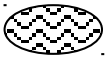 – key areas of the national level:
1 – Holohirska;
2 – Verhniobuzka;
3 – Tsentralnomalopoliska;
4 – Zakhidnomalopoliska.
 – key areas of the regional level:
a – Volytska; b – Pukachivska; c – Prybuzka; d – Sosnivska.
 – new proposed nature protected areas;
 – ecocorridors of the regional level:
1 – Buzko-Volynskyi; 2 – Malopoliskyi;
 – ecocorridors of the local level;
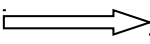 – direction of the ecocorridor of the national level;
 – direction of the ecocorridor of the regional level;